Celebrating the Welsh Landscape in Every Garden
“Our gardens are designed as living habitats — spaces that bloom with native species, support pollinators, and reconnect people with nature.”
Why Native Planting Matters
Every Willowford Homes garden begins with a respect for place. By reintroducing plants that naturally belong in the Welsh landscape — from foxglove and meadowsweet to wild thyme and harebell — we create outdoor spaces that are both beautiful and ecologically valuable.
Native plants are resilient, low-maintenance, and support a remarkable diversity of bees, butterflies, and other pollinators. Our landscapes are designed to thrive with minimal intervention, offering colour and structure across the seasons while enriching biodiversity.
Transforming Unused Ground into Living Space
Many of our plots include areas that were once paved, compacted, or overlooked. We reimagine these spaces as pockets of life — planting beds, pollinator patches, and shaded corners where native flora can return.
This approach not only delivers measurable biodiversity gain but also enhances the wellbeing of our residents, creating gardens that hum with life and invite year-round enjoyment.
A Bee-Friendly Wales
Inspired by the principles of a bee-friendly Wales, each planting design supports native pollinators and local ecosystems. We favour plants with extended flowering seasons and provide a mix of nectar and shelter sources across the site.
Typical species include:
- • Common knapweed (Centaurea nigra)
- • Wild marjoram (Origanum vulgare)
- • Meadow cranesbill (Geranium pratense)
- • Foxglove (Digitalis purpurea)
- • Oxeye daisy (Leucanthemum vulgare)
- • Field scabious (Knautia arvensis)
Sustainability Beyond Planting
Our green ethos extends beyond species choice. Gardens are designed with permeable paths, natural drainage, and low-water planting schemes that adapt to the local microclimate. Together, these create sustainable, low-maintenance landscapes that mature gracefully with time.
Clytiau’r Gwenyn – Bee Patch of Wales
A compact, low-maintenance native planting for bees and butterflies, inspired by Welsh meadows and hedgerows.
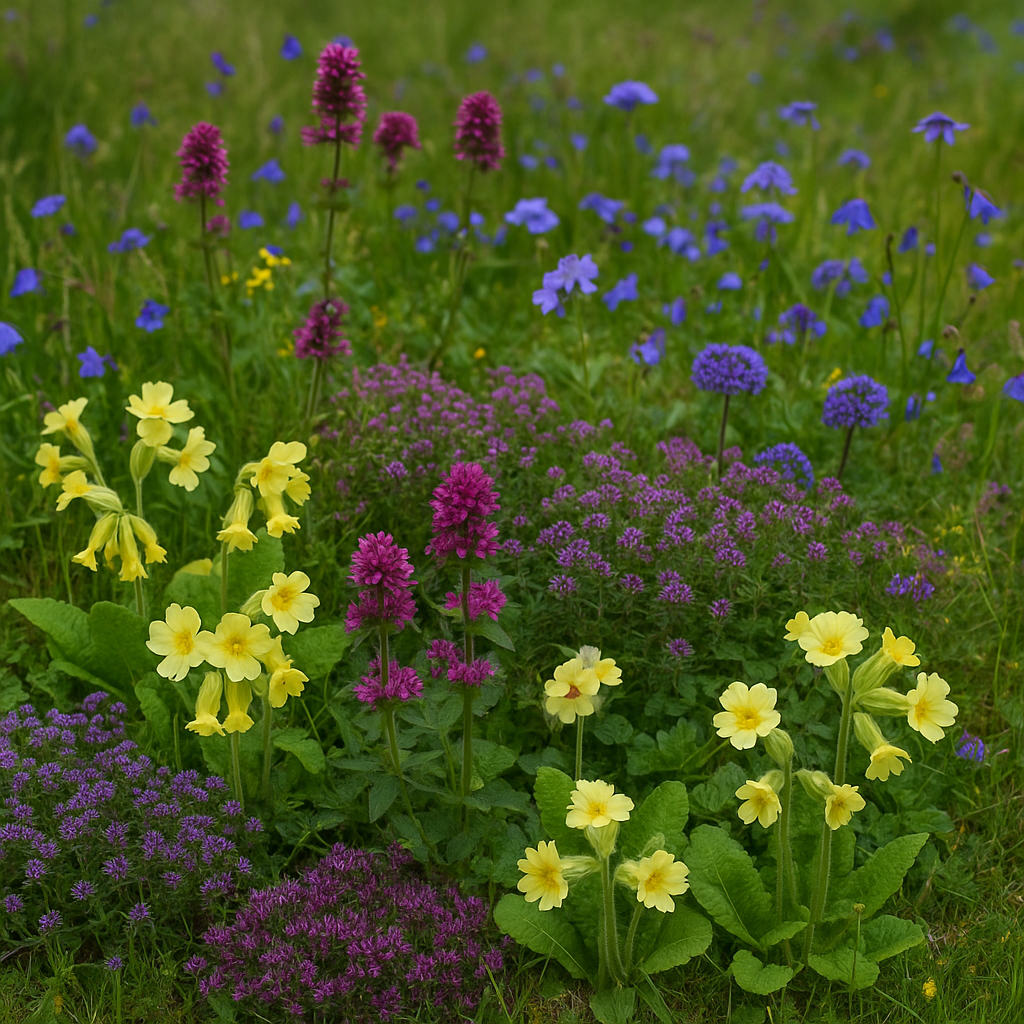
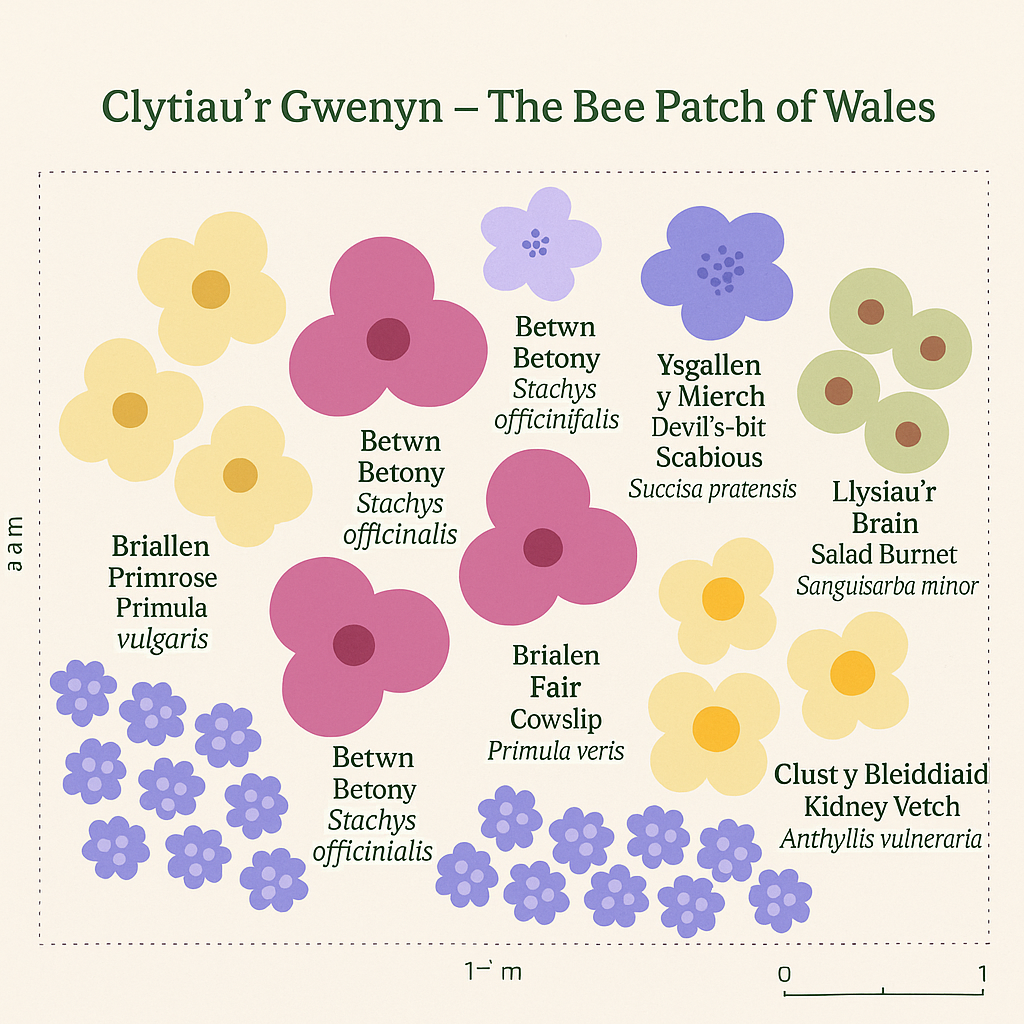
Briallen • Primrose
Primula vulgaris
Early nectar (Feb–Apr); compact, semi-evergreen rosettes.
Briallen Fair • Cowslip
Primula veris
Sunny nodding flowers; polite clump-former (Mar–May).
Betwn • Betony
Stachys officinalis
Purple spikes, long flowering (Jun–Sep); non-aggressive clumps.
Teim gwyllt • Wild Thyme
Thymus polytrichus
Aromatic evergreen mat; bee magnet (May–Aug).
Clychau’r Gog • Harebell
Campanula rotundifolia
Delicate blue bells; drought-tolerant (Jun–Sep).
Ysgallen y Meirch • Devil’s-bit Scabious
Succisa pratensis
Late forage (Jul–Oct); vital for pollinators.
Llysiau’r Brain • Salad Burnet
Sanguisorba minor
Semi-evergreen rosettes for year-round texture.
Clust y Bleiddiaid • Kidney Vetch
Anthyllis vulneraria
Silver-green cushions; excellent on free-draining soils.
Discover the Willowford Approach
We believe every development should leave nature richer than before. Explore how our design philosophy shapes homes, gardens, and communities that stand the test of time.
Designed in harmony with the Welsh landscape, supporting biodiversity and wellbeing for generations to come.